
A guide to hockey showcases for college and junior recruiting
What a showcase is, who sits in the stands, when to start going and how to choose one that’s worth the trip. Written for players and parents by the people who run AHA and WAHA showcases.
Advancement Hockey Showcases Updated
Jump to a section
What is a hockey showcase?
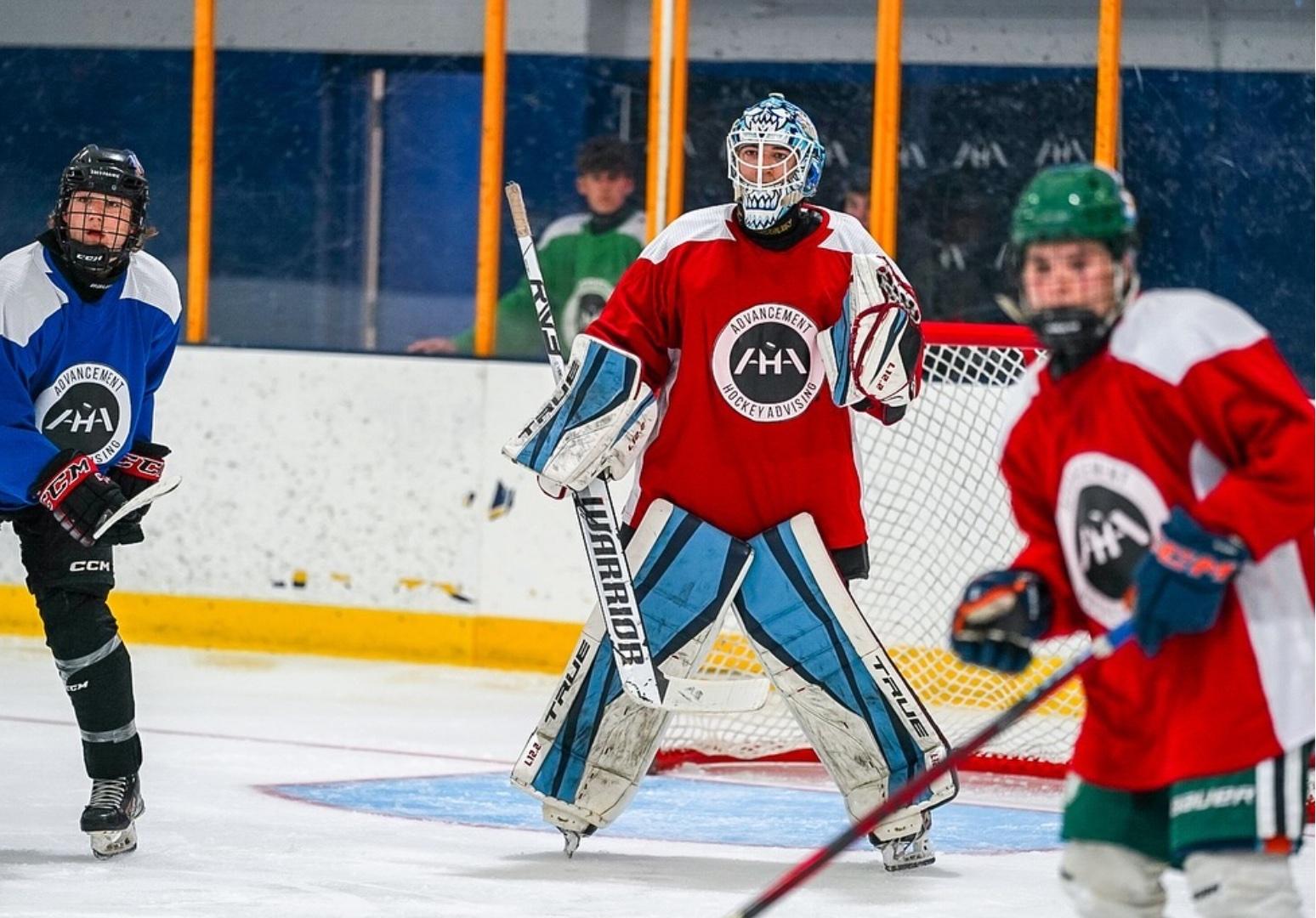
A hockey showcase is an event built for recruiting. Players register on their own, get placed on teams, and play a set of games in front of coaches and scouts from college, junior and prep programs. Many run over a weekend in the spring or summer, after the season ends and coaches have time to travel.
During the season, a coach might see you once, in one game, if your schedules happen to line up. A showcase turns that around.
Many programs in one building, for a whole weekend, watching every game you play.

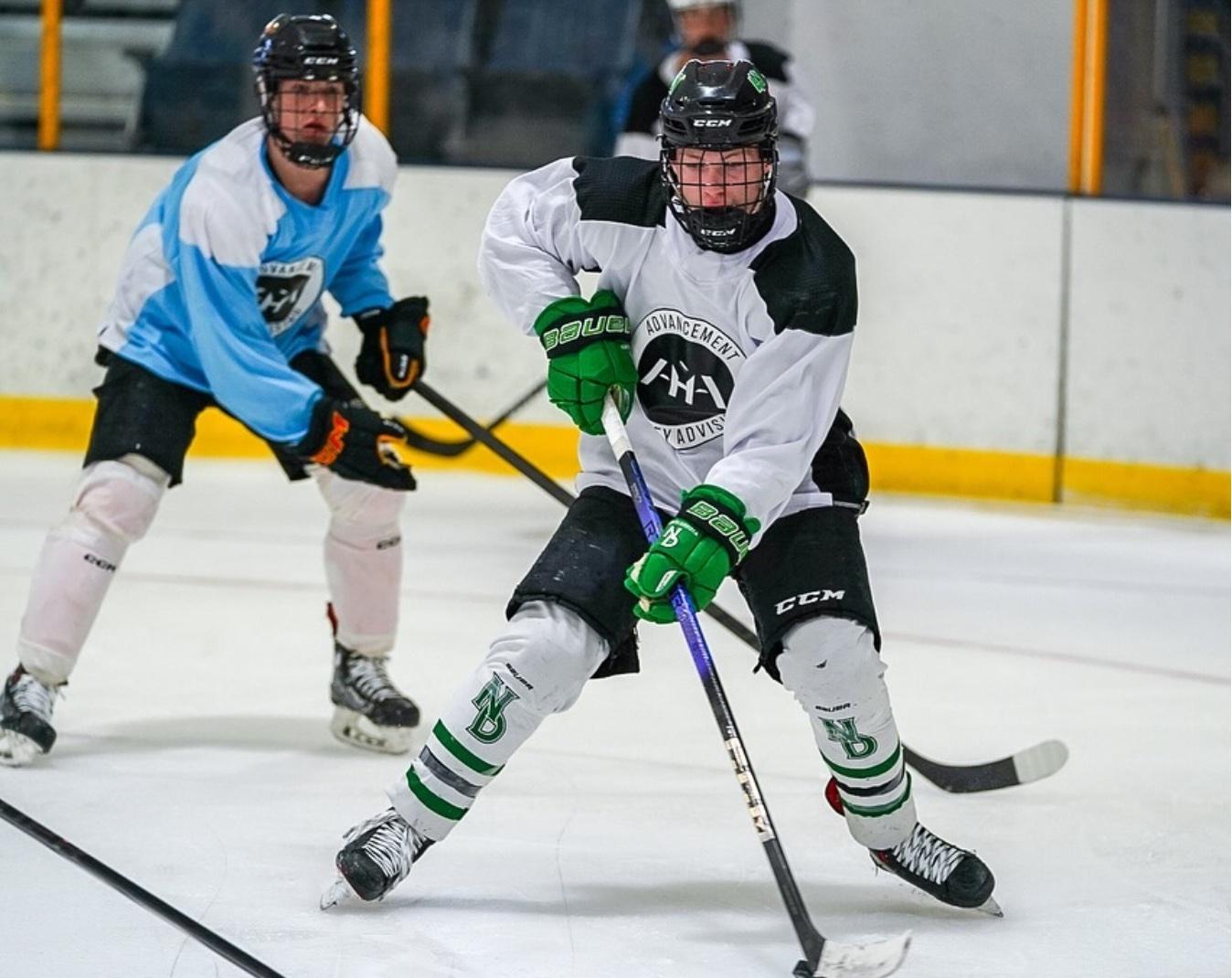
Most showcases add more than games: off-ice testing that gives coaches hard numbers on your speed and strength, skill sessions, and seminars on how recruiting works.
Showcases, camps and tryouts
The names get used loosely, so here’s what each kind of event is for.
Showcase
- Run by
- An independent organizer
- Who watches
- Many programs at once
- What it’s for
- Exposure in games
Camp
- Run by
- A coach or skills company
- Who watches
- Sometimes a few scouts
- What it’s for
- Practice and skill work
Junior tryout
- Run by
- One junior team or league
- Who watches
- That team’s staff
- What it’s for
- A spot on that roster
Prospect camp
- Run by
- One college program
- Who watches
- That college’s staff
- What it’s for
- A close look at one school
Who watches a hockey showcase
Who comes depends on the age group, the level and whether it’s men’s or women’s hockey. These are the groups you’ll see in the stands.
College
NCAA Division I, II and III, ACHA, and U SPORTS teams from Canadian universities. College coaches look for players they could bring in over the next few seasons.


Junior
Men’s junior teams from the USHL, NAHL, NCDC and other US leagues, Junior A in Canada, and the CHL. For most men who play college hockey, junior is the step before.




Prep and AAA
Prep schools and AAA programs filling next season’s rosters, usually with players from the younger birth years.



Ask which programs have confirmed for this year, by name. Lists of past attendees are useful, but programs change their plans from year to year.
The path to college hockey
Men and women usually take different routes to college hockey, and that changes when showcases matter most for each.
Men’s hockey
15–18
typical ages
Youth, AAA and prep
16U and 18U AAA, high school and prep school hockey
16–20
typical ages
Junior
USHL, NAHL, NCDC and other junior leagues, Junior A in Canada, and the CHL
18.9
average age when Division I players commit
College
NCAA Division I, II and III, ACHA and U SPORTS
In College Hockey Inc. studies, more than 80 percent of men’s Division I commitments went to players already in junior hockey, and the average player made his college debut at about 20.
Since August 1, 2025, players with CHL experience can play NCAA Division I hockey. Division III still treats them as ineligible.
Women’s hockey
15–18
typical ages
Youth, AAA and prep
16U and 19U AAA, U18 in Canada, high school and prep school hockey
17+
average age when Division I players commit
College
NCAA Division I and III, ACHA and U SPORTS
Women usually commit straight from 19U, prep or high school hockey, with no junior step in between.
When to start going to showcases
Coaches can watch you at any age. When showcases count the most depends on the route you’re on.
Men’s hockey
16–20
First to land a junior spot, then to get seen by colleges. Most men commit at around 19.
Women’s hockey
15–17
The window opens earlier, since most women commit to Division I at around 17.
In men’s hockey, Division I coaches can start calls, emails, texts and unofficial visits on January 1 of a player’s sophomore year of high school, and official visits on August 1 before junior year. Women’s hockey has its own dates, which have been under review, so check College Hockey Inc. for the current rules.
Going a year before it really counts, just to learn how a showcase works, is rarely wasted.
Are hockey showcases worth it?
They can be, if the event fits you. No showcase can promise a roster spot, a commitment or a scholarship. A good one gets you a fair look from the right people, and shows you where your game stands.
Worth it when
- The coaches you’d want to play for are confirmed
- You get at least three games and plenty of shifts
- The level matches where your game is
- You’ve done the prep work below
Skip it when
- It’s too big for anyone to stand out
- The level is far above or below yours
- Nobody will say who’s coming
- The programs watching aren’t ones you’d play for
How to choose a hockey showcase
Before you pay, ask the organizer these questions. A well-run showcase will answer every one plainly. Tick them off as you go.
How to get noticed at a showcase
1–2 weeks before
Before the weekend
- Make a short list of programs that fit your level, your grades and where you’d want to live.
- Email those coaches with your team, jersey number, game times and a link to your video. Keep it short, and write it yourself.
- Put together a one-page hockey resume: position, birth year, height and weight, school and graduation year, recent stats, references and a video link.
What a good email to a coach looks like
- To
- Coach Lee
- Subject
- 2009 defenseman, #14 at the Spring Showcase, May 21–23
Hi Coach Lee,
I’m a 2009 left-shot defenseman playing 18U AAA, and I’ll be at the Spring Showcase from May 21 to 23, wearing #14 on the white team. Our games are Friday at 4:15, Saturday at 11:00 and Sunday at 9:30.
My highlights and stats are at the link below. I’d love for you to catch a shift.
Thanks, Alex Morgan 6′1″, 185 lb · Class of 2027 · 3.6 GPA
Short, specific and written by the player. A name, a number and a time a coach can act on. Game days
At the rink
- Play your own game. Coaches recruit for roles, and a stay-at-home defenseman trying to play like a scoring forward is hard to picture on their roster.
- Compete on every shift, including away from the puck. Scouts watch backchecking, line changes and how you respond to a mistake.
- Be the player a coach would want in the room: on time, coachable, and good with teammates and officials.
- Go to the seminars and talk to coaches when you get the chance. Parents, let the player lead those conversations.
Within a few days
After the showcase
- Email the coaches you contacted. Thank them, and send your schedule for next season.
- Add your best clips and any testing results to your video and resume.
- Stay in touch every few months with real updates. Recruiting takes time.
Players can email college coaches at any age. Division I coaches may not be allowed to reply until their contact date, so a quiet inbox doesn’t mean they aren’t interested.
FAQ
What age should you go to a hockey showcase?
Most players start going between 14 and 16. In men’s hockey, showcases matter most from about 16 to 20, while players work toward junior and college spots. In women’s hockey, they matter most from about 15 to 17, since most Division I commitments happen around 17.
How much does a hockey showcase cost?
Registration usually covers the games, and sometimes testing, seminars, a jersey or meals. Travel and hotels come on top, so add them in before you compare events. Prices for our 2027 showcases are on each event page.
Do college coaches really go to showcases?
Yes, when the event is well run and well timed. Ask which programs have confirmed by name. At our 2026 Boston showcase, 75 NCAA and junior scouts and coaches were in the building.
About our showcasesCan a showcase get you a scholarship?
Scholarships come from colleges, after they recruit you, so a showcase is one way to get in front of them. NCAA Division III schools don’t give athletic scholarships at all, though many offer academic and need-based aid.
Can CHL players play NCAA hockey?
Yes, in Division I. Players with CHL experience became eligible for NCAA Division I hockey on August 1, 2025. Division III still treats them as ineligible.
Is a showcase the same as a junior tryout?
No. A junior tryout, or main camp, is one team filling its own roster. A showcase puts you in front of many junior teams and colleges at once, and junior scouts often use showcases to find players to invite to their camps.
Should goalies go to showcases?
Yes. Most programs only need one or two goalies a year, so being seen by many of them in one weekend helps. Many showcases, ours included, take goalies by application to keep the numbers even.